Evidence HubWhat Works Resources

Additional Info
- VAWG themes VAWG & Economic Empowerment, VAWG & Social Norms
This factsheet is about how gender inequality fuels the HIV epidemic. Gender based violence (GBV) leads to a higher incidence of unsafe sex and a lower ability to negotiate condom use. Social norms around child marriage, age discordant relationships and early sexual debut can also affect HIV acquisition. Research indicates that economic dependence on male partners or family members makes women and girls more likely to acquire HIV. This factsheet looks at ways to empower women economically, and potentially barriers blocking the way. It also features case studies from around the world.
Additional Info
- VAWG themes VAWG & Economic Empowerment, VAWG & Social Norms
Download the latest Infographic compiled by Component Three of the What Works to Prevent Violence Against Women and Girls Global Programme.

October 2018
Alangea, D. O., Addo-Lartey, A. A., Sikweyiya, Y., Chirwa, E. D., Coker-Appiah, D., Jewkes, R., & Adanu, R. M. K. (2018). Prevalence and risk factors of intimate partner violence among women in four districts of the central region of Ghana: Baseline findings from a cluster randomised controlled trial. PloS one, 13(7), e0200874.
Stern, E., Martins, S., Stefanik, L., Uwimpuhwe, S., & Yaker, R. (2018). Lessons learned from implementing Indashyikirwa in Rwanda-an adaptation of the SASA! approach to prevent and respond to intimate partner violence. Evaluation and program planning, 71, 58-67.
Al Mamun, M., Parvin, K., Yu, M., Wan, J., Willan, S., Gibbs, A., ... & Naved, R. T. (2018). The HERrespect intervention to address violence against female garment workers in Bangladesh: study protocol for a quasi-experimental trial. BMC public health, 18(1), 512.
Chirwa, E. D., Sikweyiya, Y., Addo-Lartey, A. A., Alangea, D. O., Coker-Appiah, D., Adanu, R. M., & Jewkes, R. (2018). Prevalence and risk factors of physical or sexual intimate violence perpetration amongst men in four districts in the central region of Ghana: Baseline findings from a cluster randomised controlled trial. PloS one, 13(3), e0191663.
Gibbs, A., Dunkle, K., Washington, L., Willan, S., Shai, N., & Jewkes, R. (2018). Childhood traumas as a risk factor for HIV-risk behaviours amongst young women and men living in urban informal settlements in South Africa: A cross-sectional study. PloS one, 13(4), e0195369.
Bhattacharjee, P., Campbell, L., Thalinja, R., Nair, S., Doddamane, M., Ramanaik, S., ... & Beattie, T. S. (2018). Understanding the Relationship Between Female Sex Workers and Their Intimate Partners: Lessons and Initial Findings From Participatory Research in North Karnataka, South India. Health education & behavior, 1090198118763934.
Gibbs, A., Corboz, J., & Jewkes, R. (2018). Factors associated with recent intimate partner violence experience amongst currently married women in Afghanistan and health impacts of IPV: a cross sectional study. BMC Public Health, 18(1), 593.
Gibbs A, Dunkle K, Jewkes R (2018) Emotional and economic intimate partner violence as key drivers of depression and suicidal ideation:A cross-sectional study among young women in informal settlements in South Africa. PLoS ONE 13 (4): e0194885. https://doi.org/10.1371/journal.pone.0194885
Christofides, N. J., Hatcher, A. M., Pino, A., Rebombo, D., McBride, R. S., Anderson, A., & Peacock, D. (2018). A cluster randomised controlled trial to determine the effect of community mobilisation and advocacy on men’s use of violence in periurban South Africa: study protocol. BMJ Open, 8(3), e017579.
Corboz, J., Hemat, O., Siddiq, W., & Jewkes, R. (2018). Children's peer violence perpetration and victimization: Prevalence and associated factors among school children in Afghanistan. PLoS one, 13(2), e0192768.
Gibbs, A., Jewkes, R., Karim, F., Marofi, F., & Corboz, J. (2018). Understanding how Afghan women utilise a gender transformative and economic empowerment intervention: A qualitative study. Global Public Health, 1-11.
Stern, E., & Niyibizi, L. L. (2018). Shifting Perceptions of Consequences of IPV Among Beneficiaries of Indashyikirwa: An IPV Prevention Program in Rwanda. Journal of Interpersonal Violence, 0886260517752156.
Gibbs, A., Corboz, J., Shafiq, M., Marofi, F., Mecagni, A., Mann, C., ... & Jewkes, R. (2018). An individually randomized controlled trial to determine the effectiveness of the Women for Women International Programme in reducing intimate partner violence and strengthening livelihoods amongst women in Afghanistan: trial design, methods and baseline findings. BMC Public Health, 18(1), 164.
Asad, N.; Karmaliani,R.; McFarlane,J.; Bhamani, SS.; Somani, Y.; Chirwa, E. & Jewkes, R. (2017). The Intersection of Adolescent Depression and Peer Violence: Baseline Results from A Randomized Controlled Trial of 1,752 Youth in Pakistan. Child and Adolescent Mental Health 22, No. 4, 2017, pp. 232–241
Kane J, Skavenski Van wyk S, Murray SM, Bolton P, Melendez F, Kmett Danielson C, Chimponda P, Munthali S, Murray LK. (2017) Testing the effectiveness of a transdiagnostic treatment approach in reducing intimate partner violence and alcohol abuse among families in Zambia: Study protocol of the Violence and Alcohol Treatment (VATU) trial. Global Mental Health, 4 (18).
Stern, E., and Niyaratunga, R. (2017). A process review of the Indashyikirwa couples curriculum to prevent intimate partner violence and support healthy, equitable relationships in Rwanda. Journal of Social Sciences: Special Edition on Select Papers from Conference on Global Status of Women and Girls. 6, 63; doi:10.3390/socsci6020063
Gibbs, A., Washington, L., Willan, S., Ntini, N., Khumalo, T., Mbatha, N.& Ferrari, G. (2017). The Stepping Stones and Creating Futures intervention to prevent intimate partner violence and HIV-risk behaviours in Durban, South Africa: study protocol for a cluster randomized control trial, and baseline characteristics. BMC public health, 17(1), 336.
Saeed Ali T , Karmaliani. R,, Mcfarlane. J., Khuwaja. H.M.A; Somani Y, Chirwa E.D.,& Jewkes. R. (2017). Attitude towards Gender Roles and violence against women and Girls (VAWG): Baseline Findings from an RCT of 1,752 Youth in Pakistan. Global Health Action, 10, 1342454
Gibbs A, Sikweyiya Y, Jewkes R. “I tried to resist and avoid bad friends”: The role of social contexts in shaping the transformation of masculinities in a gender-transformative and livelihood strengthening intervention in South Africa. Men and Masculinities Article first published online: January 1, 2017 DOI: https://doi.org/10.1177/1097184X17696173

Useful tips for writing for blogs, social media, videos, policy briefs, and letters to policy makers.

Stepping Stones Training Manual for Sexual and Reproductive Health Communication and Relationship Skills
The manual is intended to be used in its entirety with peer group participants who work through all sessions, each building on previous sessions. It is designed for use with people of any age and both genders. Originally developed for use in small, rural communities in Uganda, it has now been adapted for South Africa and after well over a decade of use is in its 3rd Edition. The Stepping Stones workshops are designed to be held with two or more peer groups drawn from a community at the same time (although this is not essential).

Additional Info
- VAWG themes VAWG & Economic Empowerment
- Country South Africa
- Project Stepping Stones and Creating Futures - South Africa
This is a comprehensive guide and teaching aid for a ten-session initiative to teach young people strategies to secure a better future for themselves. Each session is clearly laid out with different subjects to consider, and different exercises to undergo. At the end of the document are a number of fact sheets to help participants progress with their education, apply for jobs, secure housing and look after their own needs.

Creating Futures is a programme designed to enhance the ability of young people to think more critically in appraising opportunities and challenges related to their lives and livelihoods. It was developed for implementation among young people (18-24 years) living in urban informal settlements in South Africa. Creating Futures is designed to be facilitated by trained peer facilitators in a participatory style, encouraging participants to seek and develop relevant livelihoods for themselves through their own learning.
Clark, C. J., Spencer, R. A., Shrestha, B., Ferguson, G., Oakes, J. M., & Gupta, J. (2017). Evaluating a multicomponent social behaviour change communication strategy to reduce intimate partner violence among married couples: study protocol for a cluster randomized trial in Nepal. BMC public health, 17(1), 75.

Compiled and edited by Lori Heise (link is external) and Elizabeth McGrory, this publication synthesises the discussions and conclusions of a three-day expert consultation on the links between HIV and violence against women and girls (VAWG).
Gibbs, A., Washington, L., Willan, S., Ntini, N., Khumalo, T., Mbatha, N.& Ferrari, G. (2017). The Stepping Stones and Creating Futures intervention to prevent intimate partner violence and HIV-risk behaviours in Durban, South Africa: study protocol for a cluster randomized control trial, and baseline characteristics. BMC public health, 17(1), 336.
Additional Info
- VAWG themes VAWG & Social Norms
- Country South Sudan
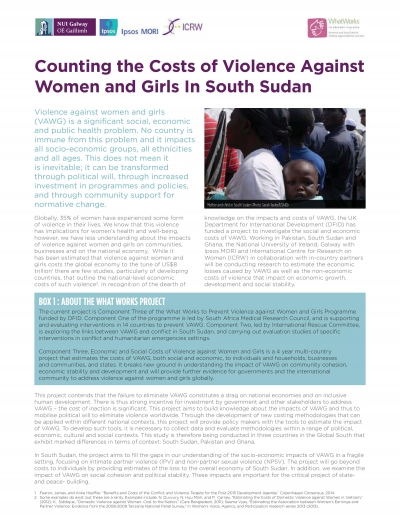
Violence against women and girls (VAWG) is a significant social, economic and public health problem. No country is immune from this problem and it impacts all socio-economic groups, all ethnicities and all ages. This does not mean it is inevitable; it can be transformed through political will, through increased investment in programmes and policies, and through community support for normative change. The publication has been authored by the Members of Component Two for What Works: Economic and Social Costs of Violence Programme.

The Right To Play Project Newsletter for April to September 2016 is out! Download it here.
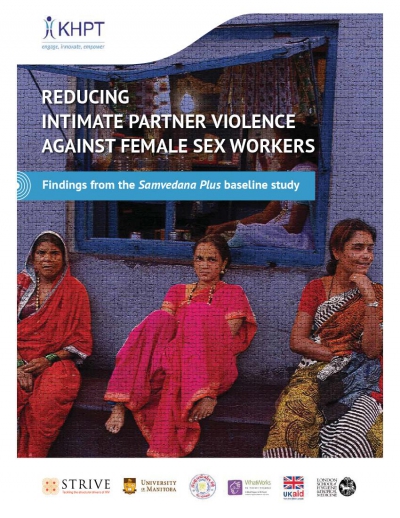
Reducing Intimate Partner Violence Against Female Sex Workers: Findings From The Samvedana Plus Baseline Study
Additional Info
- VAWG themes VAWG & Social Norms
- Country India
- Project Karnataka Health Promotion Trust - India
Violence persists in sex workers’ relationships with their intimate partners, an intervention and evaluation study, Samvedana Plus, was designed to understand and address violence and HIV risk in the intimate partnerships of female sex workers. Karnataka Health Promotion Trust (KHPT) is implementing Samvedana Plus, in partnership with Chaitanya AIDS Tadegattuwa Mahila Sangha, a communitybased organisation (CBO) of sex workers in northern Karnataka, India. The findings of the report are related to four broad categories: characteristics of the female sex workers and intimate partner relationships; gender attitudes, social norms and violence acceptance; experience of intimate partner violence, solidarity and self-worth; and STI/HIV risk perceptions, skills for self-protection and condom use among female sex workers.

This document describes the Department for International Development’s (DFID) open and enhanced access policy for the research that DFID funds. The aim of this policy is to increase the uptake and use of findings from research funded by DFID.
This branding guidance is for staff in DFID and its partner organisations. It predominantly covers use of the UK aid logo, which is the logo most relevant to delivery partners.
Additional Info
- VAWG themes Costs of VAWG
- Author Nata Duvvury
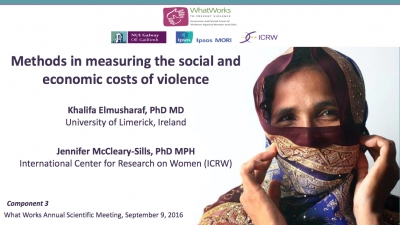
Presentation for the What Works Annual Scientific Meeting, September 9, 2016, outlining the questions, approach, focus, design and framework of research into VAWG.
Additional Info
- VAWG themes VAWG & Social Norms
- Country Ghana
- Project Gender Centre - Ghana
A study to assess the community level impact of the Gender Centre’s Rural Response System in reducing VAW in Ghana. This presentation features methodology demographics and results, looking at IPV statistics and the prevalence of different forms of IPV.
Violence Against Women and Girls in the context of conflict in South Sudan: A Qualitative study
Additional Info
- VAWG themes VAWG in Conflict and Humanitarian Crises
- Country South Sudan
The goal of the formative research was to improve understanding of the overall context of VAWG and conflict in South Sudan, as well as to inform the design of the population-based survey and complementary qualitative tools, which is being implemented in the final phases of study. This research report features the methodology involved, and an assessment of the different types of VAWG. The report encompasses aspects such as marriage dowry, violence in girlhood, violence in adulthood, and conflict and VAWG, before finishing with conclusions and recommendations.
Additional Info
- VAWG themes VAWG & Education, VAWG & Social Norms
- Country Pakistan
- Project Right to Play - Pakistan
This report studies the prevalence of peer violence among sixth grade students in Hyderabad. It also seeks to describe associations between socio-economic status, school performance, mental health, gender attitudes, violence at home and peer violence perpetration and victimisation.
Exploring the nature of VAWG, and its effects among migrant labour communities in Baglung district, Nepal
Additional Info
- VAWG themes VAWG & Economic Empowerment, VAWG & Social Norms
- Country Nepal
A study exploring the nature of VAWG and its effects, the community response to VAWG, and the linkages between economic conditions and VAWG. This study looks at the dominant gender norms for each sex, the causes of household conflict, and the causes and different types of VAWG. It finishes with conclusions and recommendations.
Additional Info
- VAWG themes VAWG & Economic Empowerment, VAWG & Social Norms
- Country Bangladesh
- Author Ashe, S., Duvvury, N., Raghavendra, S., Scriver, S., and O’Donovan, D.
There has been a growing interest in deriving the associated costs of violence against women. This has coincided with an explosion of costing studies in recent years, particularly after 2000, when interest in establishing these costs grew dramatically. Currently over 55 studies, mostly from high-income countries, have attempted to quantify the costs of various forms of violence against women. However, providing a comparison across countries can be difficult. This is mainly due to the different categories of costs, different forms of violence, and the different sampling approaches undertaken by individual studies (Varcoe et al., 2011). This comparison becomes even more difficult in developing country contexts where the availability of data is less robust and less systematic attention has been placed on measuring the economic costs of violence against women when compared to their industrialised counterparts. In this review of the evidence on the costs of violence against women, we provide an assessment of what we have learned and we establish the gaps which need to be addressed in future costing studies.
Authors: Ashe, S., Duvvury, N., Raghavendra, S., Scriver, S., and O’Donovan, D.
What Works To Prevent Violence Against Women And Girls In Conflict And Humanitarian Crises: Contributions To The Field
Additional Info
- VAWG themes VAWG in Conflict and Humanitarian Crises, VAWG & Social Norms
- Country Kenya, South Sudan
What Works to Prevent Violence Against Women and Girls is a £25 million global programme funded by the UK Department for International Development which seeks to understand and address the underlying causes of violence across Africa, Asia and the Middle East. The What Works programme is not alone in investing time and resources in researching and prioritising prevention and response to GBV. In 2013, Sweden and the UK Department for International Development jointly launched the Call to Action on Protection from GBV in Emergencies, a global appeal to diverse stakeholders – governments, donors, NGOs, civil society, women’s organisations, the private sector-to make specific commitments to contribute towards transforming the way GBV is addressed in the humanitarian space.
This brief sets out how the What Works to Prevent Violence Against Women and Girls in Conflict and Humanitarian Crises research portfolio complements and supports the achievements of the Call to Action’s objectives. The Call to Action identifies am “insufficient evidence base on effective programming and systemic response” as one of its areas of concern. As the largest multi-year study currently examining VAWG in conflict and crisis, What Works will play in instrumental role in advancing research in this area.

What Works To Prevent & Respond To Violence Against Women And Girls In Conflict And Humanitarian Settings?
Additional Info
- Author Maureen Murphy, Diana Arango, Amber Hill, Manuel Contreras, Mairi MacRae & Mary Ellsberg
- Date of publication -
Women and girls are at increased risk of violence in conflict and humanitarian crises due to displacement, the breakdown of social structures, a lack of law enforcement, and a culture of impunity. This briefing paper provides a succinct overview of violence against women and girls (VAWG) in conflict and humanitarian emergencies. It reveals that little is known about the prevalence of VAWG in humanitarian emergencies. In addition, there is little robust evidence on what works to prevent and respond to VAWG in humanitarian emergencies. What evidence does exist suggests that the types of VAWG prevalent in humanitarian emergencies are not dissimilar to VAWG in non-emergency settings. As such, approaches that have been successful decreasing forms of VAWG such as intimate partner violence, and target underlying unequal gender norms and practices, may also be applicable in humanitarian settings.

Additional Info
- VAWG themes VAWG & Social Norms
- Country India
- Project Karnataka Health Promotion Trust - India
A study of levels of IPV against FSW in this area of Southern India produced a significant anomaly. IPs reported significantly higher incidences of violence than FSW. This presentation looks at three potential hypotheses for the anomaly, namely: IPs over-reported the violence; respondents didn’t understand the question; and FSW under-reported the violence.
Additional Info
- VAWG themes Costs of VAWG
- Country Egypt
- Project What Works project, but funded by UNFPA
- Author Nata Duvvury
This study looks at the prevalence and incidence of the different type and forms of violence against women, and considers the impact of violence on women’s health, reproductive health and wellbeing. What are the consequences of violence against women and their associated economic costs?
Evidence Brief: What Works To prevent and respond to violence against women and girls in conflict and humanitarian settings
Additional Info
- VAWG themes VAWG in Conflict and Humanitarian Crises, VAWG & Social Norms
Additional Info
- VAWG themes VAWG in Conflict and Humanitarian Crises
This report looks at the challenges of conducting research in conflict and humanitarian settings, including lack of infrastructure, costs, methodological and ethical issues. It examines the need for security, avoiding harm to respondents, recruiting and training fieldworkers, and correct management practice. There is also an assessment of the specific challenges of conducting research in a refugee camp, and solutions to the challenges.